
At 2681m the air is thinner, the space is larger, and the atmosphere is harsher. This is the first thing we learned as we trekked up to the Faulhorn. The weather in the Grindelwald valley below wasn’t all the that pleasant but as we moved up in altitude in the mid-morning, the skies cleared up and the peaks of the Jungfrau and Eiger could clearly be seen. This cow was also up on the mountain – how it managed to get up to 2681m wasn’t really on my mind, but more on why he/she would be here – could the grass be better?
Being first on the mountain (or anything for that matter) reminds me of the First Law of Marketing. According to Al Ries and Jack Trout who wrote the ‘22 Immutable Laws of Marketing‘, the first law is about creating a category to be first in. It’s what they call the “law of leadership” – It’s better to be first than it is to be better and it’s much easier to get into someone’s head first than it is to convince them you have a better product than the one that got into his/her head in the first place.
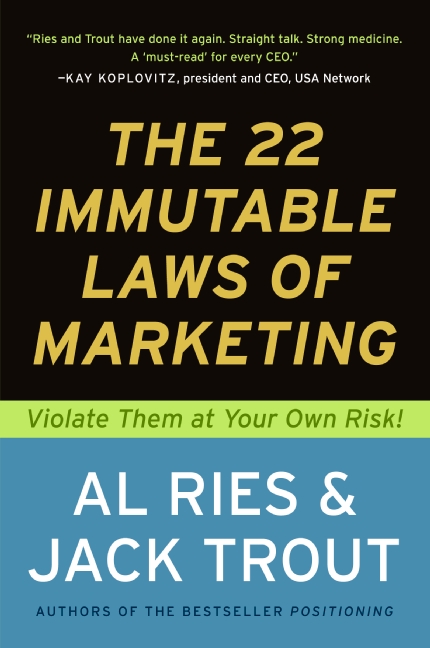
Why the book is a bit dated (the version I have is from 1993), it is a classic in terms of breaking down marketing concepts into 22 simple to understand laws. For the authors, the essence of marketing is narrowing the focus, where you become stronger when you reduce the scope of your operations.
You can’t stand for something if you chase after everything.
For the first half of the book, the authors, who also wrote the bestseller on Positioning, made it pretty clear that everything is tied to the First Law and how marketers need to understand their consumer base and how they think. Towards the second half of the book, they touch on more internal issues particularly on how to maintain customers once you’ve gotten into their minds.
Marketing is a game fought in the mind of the prospect. You need money to get into a mind. And you need money to stay in the mind once you get there.
Even with the ideas and the resources to make it happen, they make a cautionary note not to wear out your welcome when it comes to messaging:
One way to maintain a long-term demand for your product is to never totally satisfy the demand.
Again, the book is a bit dated and the examples used come from a time when computers were just a novelty, the internet was in its infancy, and where traditional communication channels and media were used. Despite all this, the laws still hold up for marketing in the modern day – it would be nice to see this book updated with examples from the digital sphere, where we spend a significant portion of our time being entertained, finding information and interacting with our friends, family and companies.