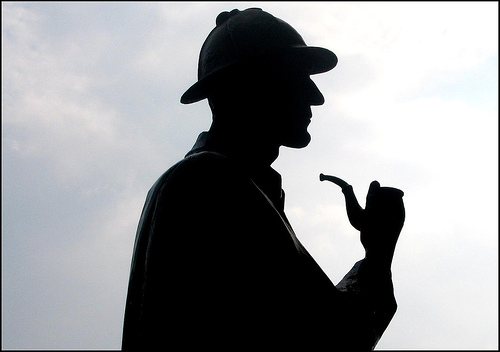
Have you seen Sherlock, the BBC One series on the famous detective by Sir Arthur Conan Doyle, set in modern times? It’s an amazing series described on the BBC website as “Sherlock Holmes and Dr John Watson’s adventures in 21st Century London. A thrilling, funny, fast-paced contemporary reimagining of the Arthur Conan Doyle classic.” The title of this blog isn’t one of Holmes’ and Watson’s classic adventures, nor is it a story made for the TV series. It refers to a parallel storyline that’s been on my mind after reading about last week’s verdict of the 2009 L’Aquila Earthquake and watching the last episode of Sherlock’s Series 2.
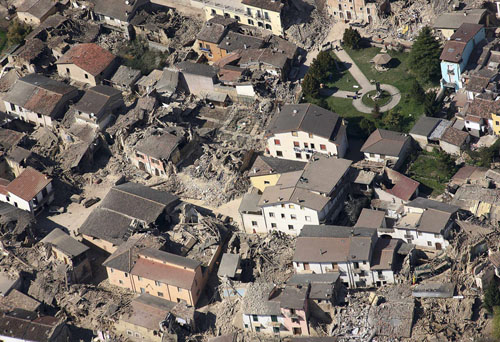
First to the earthquake: On Tuesday (22 Oct) seven men (6 scientists and 1 government official) were convicted of manslaughter in connection with their predictions about an 6.3 magnitude earthquake in l’Aquila, Italy in 2009 that killed 309 people. They have been sentenced to six years in prison. Prosecutors said the defendants gave a falsely reassuring statement before the quake, while the defense maintained there was no way to predict major quakes. Lawyers have said that they will appeal against the sentence. Why all the fuss? Well, the trial brings to light deeper issues such as the reliability of science, seismology and the ability or inability of scientists to predict earthquakes. At the same, the scientific community are up in arms about the trial and verdict and what it means in the future. One comment I’ve seen sarcastically referred to suing the weatherman if he didn’t get his forecasts right. Some, like a blogger for Scientific American, believe the convictions were about poor risk communication and the responsibility scientists have to educate people make informed decisions. Others, like in Wired or the Guardian, also believe that it’s about what information, facts, and data are at hand, how it is communicated and for the public to know their options.

Now to Sherlock: Yesterday, I sat down and watched “The Reichenbach Fall” the final episode of Series 2 of Sherlock where (spoiler alert!) Sherlock and his nemesis James Moriarty die. The main storyline is how James Moriarty tests Sherlock and aims to discredit Sherlock’s reputation and drive him to (another spoiler alert!) suicide. What’s interesting this storyline is the way in which Moriarty makes every effort to show that all of Sherlock’s deductive/scientific abilities are not only useless but are his ultimate weakness. In the show’s fictional website “The Science of Deduction“, Sherlock’s process in solving mystery’s are broken into three simple steps, which resonates with the scientific process:
- I observe everything.
- From what I observe, I deduce everything.
- When I’ve eliminated the impossible, whatever remains, no matter how mad it might seem, must be the truth.
“I need data” is a common phrase that Sherlock uses in the series. Sherlock’s scientific mind highlights the fact that with the right amount of data and information, he can make any deduction and understand the world and people around him despite being socially awkward and having problems with authority (luckily he has Watson to help in this area). While Sherlock is fiction, his philosophy of deduction based on observation and data clearly has links to the non-fictional world of science. There is no doubt that science has an important role to play in society. As Tracey Brown writes in the Guardian:
Science is founded on the collaborative open exchange necessary to develop a true picture of our world, of what has happened and what is likely to happen. From volcanology to climate, bird flu to prion disease, we need to be sure that the best available knowledge is just that – available. It means that we depend on scientists, often at fraught moments and with lives at stake, being willing to speak truth, as they see it at that point with all the caveats and uncertainties, to power.

Moriarty’s attempt to discredit Sherlock (and his scientific deductions), Sherlock’s communication style, and the verdict to sentence scientists to jail over the L’Aquila earthquake shows that science, policy, and communication need to work together to help people make better decisions and understand their risk and choices. Each of these cannot be more important than the others.