
What makes a city great is the people in it. And the more the merrier… because it helps economies grow, generate innovation and provides facilities that are difficult to access in less crowded places (think health, education, etc.). Don’t forget the cultural sights and sounds, like museums, restaurants, and movies! So what’s not to love? A dense space, whether it’s called urban or city, creates numerous opportunities for people – know wonder population growth in urban areas are growing. According to the World Health Organization, “By 2030, 6 out of every 10 people will live in a city, and by 2050, this proportion will increase to 7 out of 10 people.”
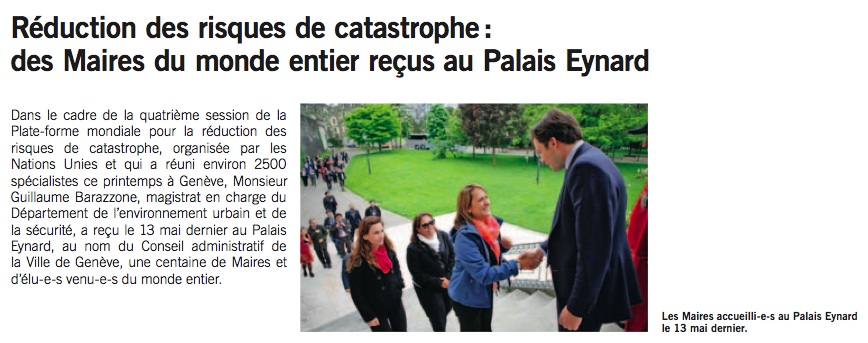
At the same time, according to UNISDR’s Making Cities Resilient campaign, this urban growth (i.e. urbanization) is also putting people at risk of disasters and exposing more people and assets (i.e. think money, infrastructure, utilities) to natural hazards like earthquakes, floods, and storms. And as this increases, the world needs to take a close and hard look at how cities and urban areas are developing and been planned to address these risks. This means that local government officials, like mayors who are faced with the threat of disasters on a daily basis, need better access to policies and tools to effectively deal with them.
Making cities safe from disasters is everyone’s business – Urban risk reduction provides opportunities for capital investments through infrastructure upgrades and improvements, building retrofits for energy efficiency and safety, urban renovation and renewal, cleaner energies, and slum upgrading.
The news was a bit of a bummer as I was sitting in a day-long seminar today and it made me think of the issue of density (and one of my urban design projects for my Master’s):
Greater urban density creates problems but also generates solutions #resilientcities #urbanization mt @hmolinvaldes
— Vincent Fung (@vfung) June 20, 2013
One of the issues that came to mind and resonated with another colleague sitting in on the seminar was food production and security.
@UNISDR Learning Session with @HMolinValdes: DRR in Cities. Food security as an emerging topic in Urban #Resilience, part of a #DRR agenda?
— Sam van den Berg (@SammBerg) June 20, 2013
Basically, if more and more people are moving into cities and there’s a big emphasis on making cities resilient, what happens to the spaces and places that help feed all those hungry people? Yes, there’s talk of urban agriculture and farms (like what’s being done in New York), but my concern is if people leave rural productive land for supposedly better opportunities and conditions in cities, will this continue to make a country less agriculturally independent creating future risks down the line? Who will be managing our food supplies and will they be making choices that will affect what we eat? This primary industry shouldn’t be neglected as the world focuses on cities, since what happens to how we manage our rural areas (and food production such as the use of chemicals, the restructuring of the environment, etc.) will have a trickle down effect on our cities. Maybe having a closer look at Regional Planning models might be better to address this interplay between rural and urban connection?
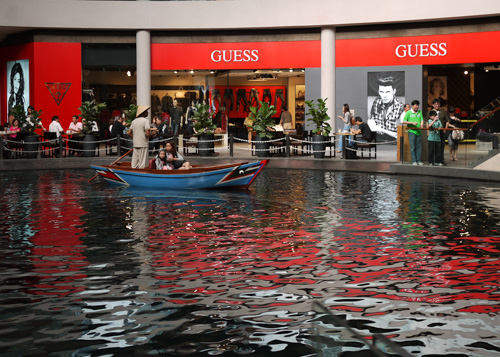
With over 1400 cities signed up to the Making Cities Resilient campaign, including a few well-known role model cities, it’s a sign that cities and local governments are taking the issue of risks and disasters seriously. In the end, it’s a win-win for everyone because we all need to call somewhere home – and hopefully it’s a safe and healthy place to live in.

Some good questions you’re posing in this blog!
Whereas urbanisation creates a lot of opportunities in economic growth and investment, it definitely has some downsides. I think you mentioned the most important one just here – who will be producing our food?
I’m sure that if we leave it up to the market, there will be food – but against what price?
Better yet: self-sufficient farmers in rural areas might often be better of staying where they are.
We need to raise awareness for those planning to move to an urban environment. More specifically: expectation management.